
Ford Madox Brown
1821 – 1893
Ford Madox Brown’s style is associated with the Pre-Raphaelite Brotherhood, though he was never a member of that group. A religious, literary, and genre painter, he is known for his subtle colouring and highly refined paintings. Brown’s most famous painting is Work (1852-63), which shows various members of Victorian society at work.
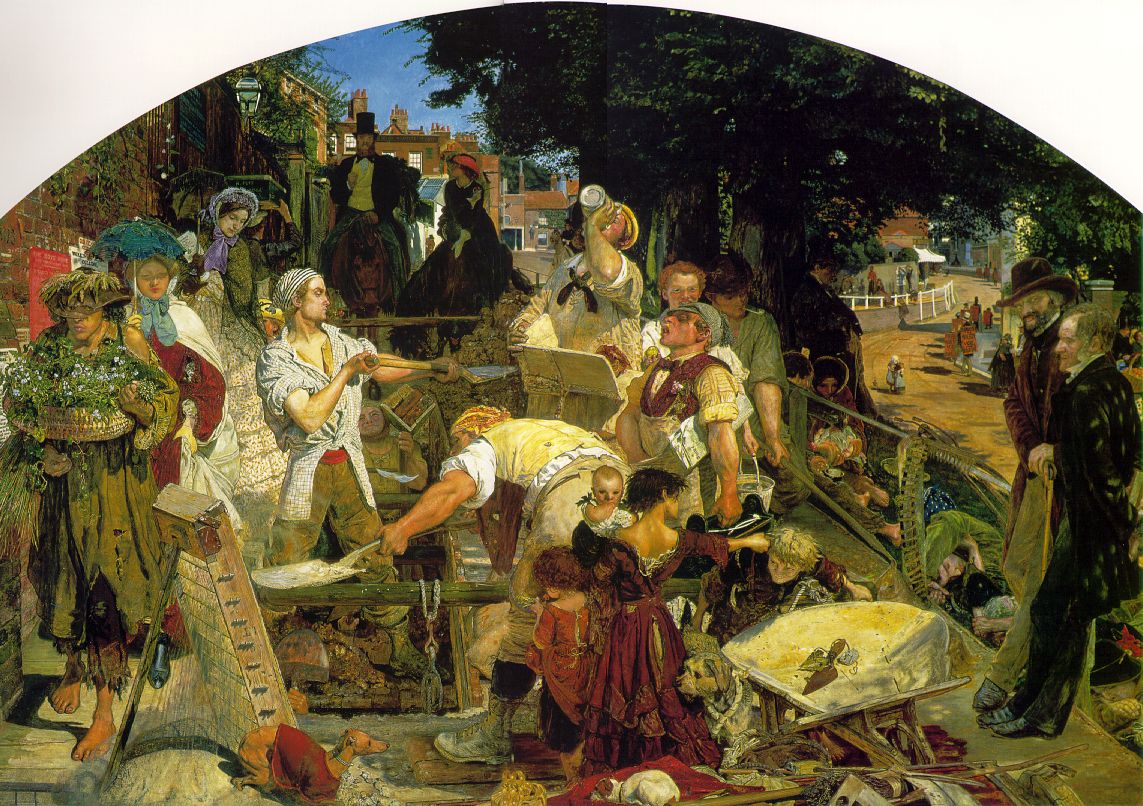
Brown was born in Calais, France, on April 16, 1821.
From 1837 to 1839 he studied art and developed his technique at Bruges and Antwerp, in Belgium. His early work is characterized by sombre colour and dramatic feeling. Brown was also very concerned with accurately portraying the human body. While painting his Prisoner of Chillon (1843), he studied corpses at the morgue of University College Hospital in London.
In 1848 Brown briefly accepted the Pre-Raphaelite painter Dante Gabriel Rossetti as a pupil, and in 1850 Brown contributed to the Pre-Raphaelites’ magazine, Germ. In addition to painting, Brown worked as a book illustrator and produced stained glass for several churches.
Brown died in London on Oct. 6, 1893.
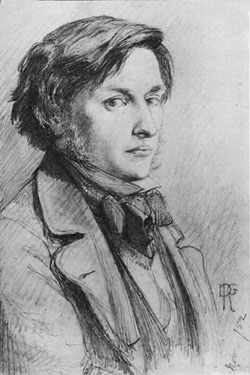
Ford Madox Brown
Windows
St. Martin
Adam and Eve
Gideon
The Crucifixion
Designs
The Pulpit